When a water heater reaches the end of its life, most homeowners face the same question: replace it with another traditional tank, or switch to tankless? Both are good options — but they suit different homes, budgets, and hot-water habits. Here's an honest breakdown, including the Florida-specific factors most national guides leave out.
How a Traditional Tank Water Heater Works
A tank heater stores 40–80 gallons of hot water, keeping it heated around the clock so it's ready when you turn on the tap. It's simple, proven technology — and the lower upfront cost is why most homes still have one. The tradeoff: you're paying to heat water even when nobody's using it (standby heat loss), and once the tank runs out, you wait for it to recover.
How a Tankless Water Heater Works
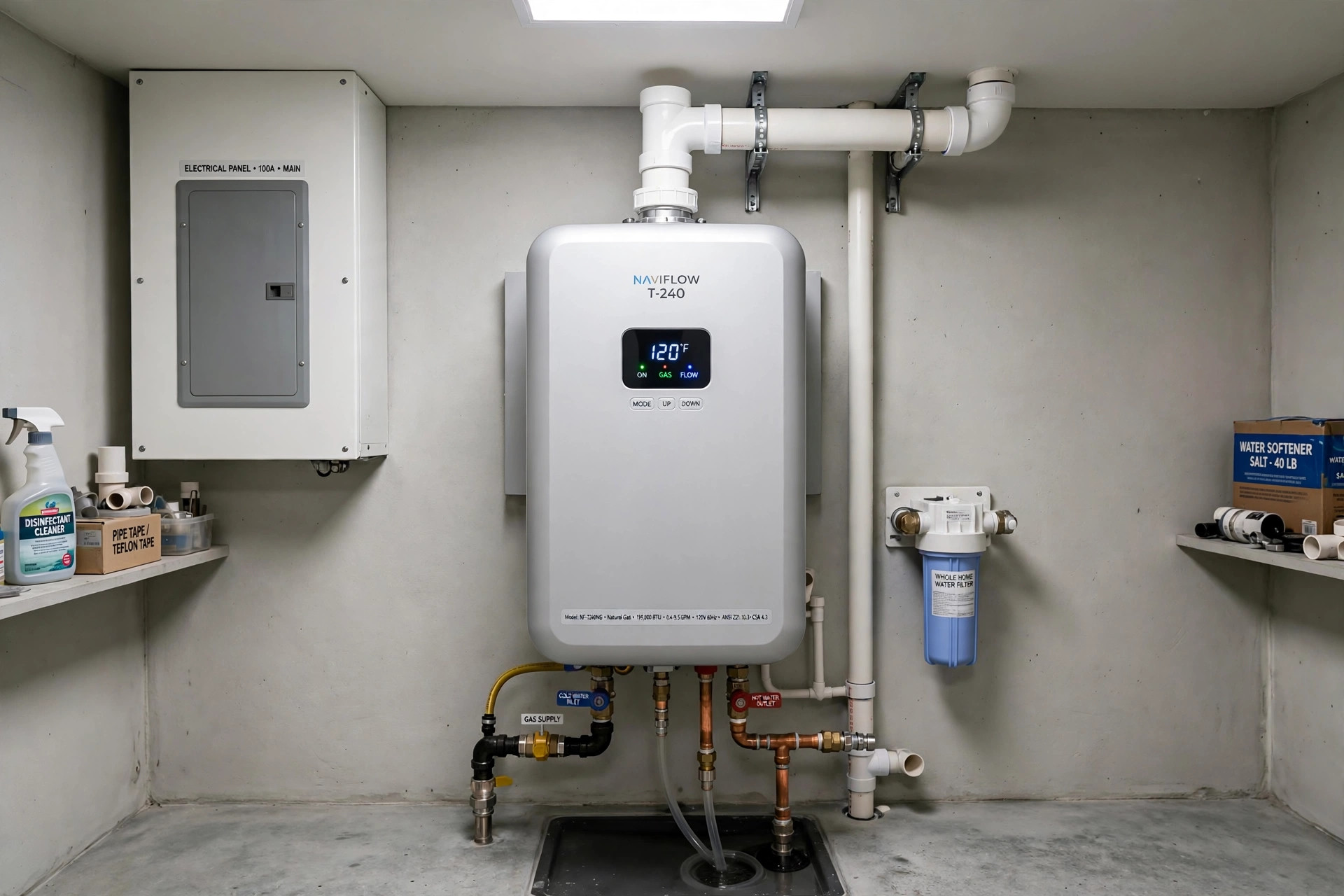
A tankless (on-demand) unit heats water only as it flows through — no storage tank, no standby loss. Open a hot tap and the unit fires up; close it and it shuts down. The result is effectively endless hot water and a much smaller footprint on the wall. The tradeoffs: higher upfront cost, and the unit must be sized correctly for your home's peak demand (two showers plus the dishwasher at once needs more capacity than one shower alone).
The Florida Factor: Hard Water
Here's what matters most locally. Florida's mineral-rich water leaves scale buildup inside any water heater — but tankless units are more sensitive to it because water flows through narrow heat-exchanger passages. A tankless heater on hard water needs regular descaling maintenance to protect its efficiency and lifespan. A traditional tank tolerates hard water more gracefully, though sediment still shortens its life (that's the popping and rumbling we wrote about). Either way, Vero Beach homes benefit from addressing water quality — see our guide to hard water solutions.
Lifespan and Efficiency Compared
Tank heaters typically last around 8–12 years; tankless units often last 15–20 years with proper maintenance. Tankless wins on energy efficiency since there's no standby loss, which shows up on utility bills over time. But the math depends on your household: a small household that uses modest hot water may never recoup the higher upfront cost of tankless, while a large family can benefit significantly.
When a Traditional Tank Makes More Sense
- Tight budget now: lower installation cost gets you reliable hot water today
- Simple swap: replacing a tank with a tank often needs no gas line or electrical upgrades
- Modest hot-water use: one or two occupants rarely push a tank past its limits
When Tankless Is Worth Considering
- High hot-water demand: big families, frequent guests, or back-to-back showers
- Long-term home: you'll be there long enough to benefit from the longer lifespan
- Space savings matter: freeing up garage or closet space has real value
- You're committed to maintenance: annual descaling keeps a tankless unit healthy on Florida water
The Bottom Line
There's no universal winner. A quality tank heater, properly sized and maintained, is a perfectly good choice for many Vero Beach homes. Tankless is the better long-term investment for high-demand households willing to maintain it. What matters most is correct sizing and professional water heater installation — an undersized tankless or an oversized tank will disappoint you either way.
Choosing a new water heater? We'll help you pick the right size and type for your home. Call (772) 946-0023.
Related reading: Water Heater Making Noise? What Popping & Rumbling Mean · Hard Water in Vero Beach: Signs, Damage & Solutions